Mastering Freshly Milled Flour: Your Ultimate Guide to Healthy Home Baking and Recipe Conversion

The transition from baking with conventional white flour to embracing the nutritional power of freshly milled flour has been nothing short of transformative for our family’s health and well-being. It’s a journey that has revitalized our approach to food and deepened our appreciation for wholesome ingredients.
Integrating freshly milled flour into nearly all my baked goods has become an incredibly rewarding experience. I’ve not only mastered how to seamlessly convert traditional recipes to utilize fresh milled flour, but I’ve also optimized my kitchen setup for efficiently milling my own grains at home. This shift has unlocked a world of flavor and nutrition that we never anticipated.
Whole grains, especially when freshly milled, offer a richness that is both satisfying and incredibly delicious, brimming with nuanced earthy flavors. What’s truly remarkable is that even our children have grown to love it. As a mom who prepares three meals a day, getting kids on board with whole grains is a significant victory, proving that healthy can also be delicious and appealing to even the pickiest eaters.
My Personal Journey into the World of Fresh Milled Flour
My initial introduction to fresh milled whole wheat flour came around 2019, through my wonderful Mennonite friends. At that time, the concept wasn’t widely discussed online, and owning a dedicated grain mill felt like a niche, almost unheard-of practice. Despite the scarcity of information, I was intrigued by the inherent health benefits. This led me to purchase my very first grain mill – an attachment for my KitchenAid mixer.
However, my early experiences were met with a fair share of disappointment. The flour produced by the attachment wasn’t particularly fine, often resulting in dense, heavy loaves of bread. While I initially blamed the coarser flour, I soon realized that my struggles were primarily due to a lack of understanding of how to properly work with whole grains. I was accustomed to producing light, fluffy hamburger buns with white flour, and attempting the same techniques with freshly ground whole wheat was yielding what felt like culinary bricks.
Yet, I was persistent. To my delight, my husband discovered a bread machine recipe that finally yielded a palatable loaf. This small success ignited a spark. Despite this, my grain mill saw less and less use over time. The process of grinding all the wheat berries felt cumbersome and time-consuming with the attachment, and so the idea of fresh milling was temporarily put on hold for a couple of years, until our move in 2020. This hiatus, however, only strengthened my resolve to revisit and ultimately conquer the art of baking with whole grains.
Embracing Sourdough with Fresh Milled Flour
The year 2020 brought not only a new home – a small rental – but also a gifted sourdough starter. My husband, ever determined to integrate fresh milled flour into our diet, saw this as a renewed opportunity. His insistence wasn’t without reason; he grew up in a household steeped in whole grain traditions. His mother would bake around six loaves of whole wheat bread weekly, often incorporating generous amounts of rye flour into her recipes. Consequently, he was intimately familiar with the robust and hearty flavors of genuine whole wheat.
He often recounts vivid memories of visiting the local mill in Ukraine, where their family would bring their home-grown wheat berries to be ground into flour. They would then return home with large sacks of freshly milled flour, which they stored carefully. This deeply ingrained experience contrasts with my own upbringing, where my mom would purchase delicious Canadian whole wheat and sourdough bread from European markets here in the United States. It’s clear that Ukrainians, in particular, hold a deep affection for hearty, whole grain breads.
Inspired by his dedication and our new sourdough starter, I resumed my experiments with fresh milled flour and sourdough. Despite my renewed enthusiasm, the initial results were still far from perfect. My breads were often too sour and excessively dense, yet I refused to give up. Through further research and experimentation, I eventually came to understand that the issue wasn’t solely with the flour, but also with my sourdough starter itself. In a moment of frustration and a desire for a fresh start, I made the tough decision to discard my struggling whole wheat flour sourdough starter. (A terrible admission for any baker, I know, but a necessary step in my learning process!)
The Life-Changing Discovery of Sue Becker
Our time in that rental home was brief. We soon moved into our farmhouse, and it was during this period that I received another invaluable gift: a robust, ripe sourdough starter from my aunt. This starter was a game-changer. It worked like a powerhouse, consistently delivering exceptional results, a success I attributed to its consistent feeding with unbleached bread flour. With this new, vibrant starter, I began making delightful sourdough breads using white flour, thoroughly enjoying the process and the delicious outcomes.
Then, serendipitously, I stumbled upon Sue Becker’s enlightening “Only Real Bread” video. This was likely sometime between 2022 and 2023. At the time, the video didn’t have a massive viewership, but its content resonated deeply with me. I found myself listening to it multiple times, sharing it with friends and family, and delving even deeper into the wealth of information she provided. I devoured nearly every video on her YouTube channel and even had the privilege of attending one of her cooking classes in person. I even have a photo with Sue Becker, a testament to the profound impact she had on my baking philosophy.
Her insights were incredibly eye-opening and truly changed my life forever. I had never felt such a profound conviction about making a significant dietary switch. I was particularly stunned when she asserted that you could make *anything* with fresh milled flour. This revelation clarified that the secret lay not in the ingredients themselves, but in mastering the *technique*. Once I understood the immense health benefits and how these practices aligned with deeply held personal beliefs and scripture, it all made perfect sense. I was completely committed. There was no turning back, and I was more excited than ever to fully embrace this journey.
When you’re truly convinced of something, you’re driven to improve. For me, that meant consuming more whole grains. This decision felt right, particularly because Sue thoughtfully incorporates scripture to support her principles, offering a reassuring foundation for her recommendations.
Embarking on Fresh Milled Flour Recipes
From that pivotal moment, my unwavering journey into fresh milled flour baking began in earnest. My initial experiments focused on using commercial yeast to validate Sue Becker’s claims. I wondered, “Is it truly possible to achieve fluffy bread with freshly milled flour?” The answer, I discovered, was a resounding yes. I diligently started with a basic whole wheat sandwich bread recipe, which became my foundational dough for a variety of creations, including cinnamon rolls, hamburger buns, and everyday sandwich bread.
Over time, I uncovered a crucial secret to achieving light and airy whole wheat bread: kneading time. Hard wheat varieties, when freshly milled, require significantly longer kneading than recipes made with white flour—typically between 12 to 24 minutes—until the dough successfully passes the window pane test. This extended kneading develops the gluten sufficiently, creating the structure needed for a soft texture.
Another vital lesson learned was that fresh milled flour recipes perform best when the dough is more hydrated, meaning it should feel slightly tackier than traditional white flour doughs. I realized the importance of not adding too much flour too quickly. Freshly milled flour absorbs liquid at a slower, more gradual pace compared to conventional flours. With white flour doughs, you can instantly gauge if too much flour has been incorporated, but with fresh milled flour, patience and a gentler approach to hydration are key to preventing a dry, dense final product.
Seamlessly Converting Existing Recipes to Fresh Milled Flour
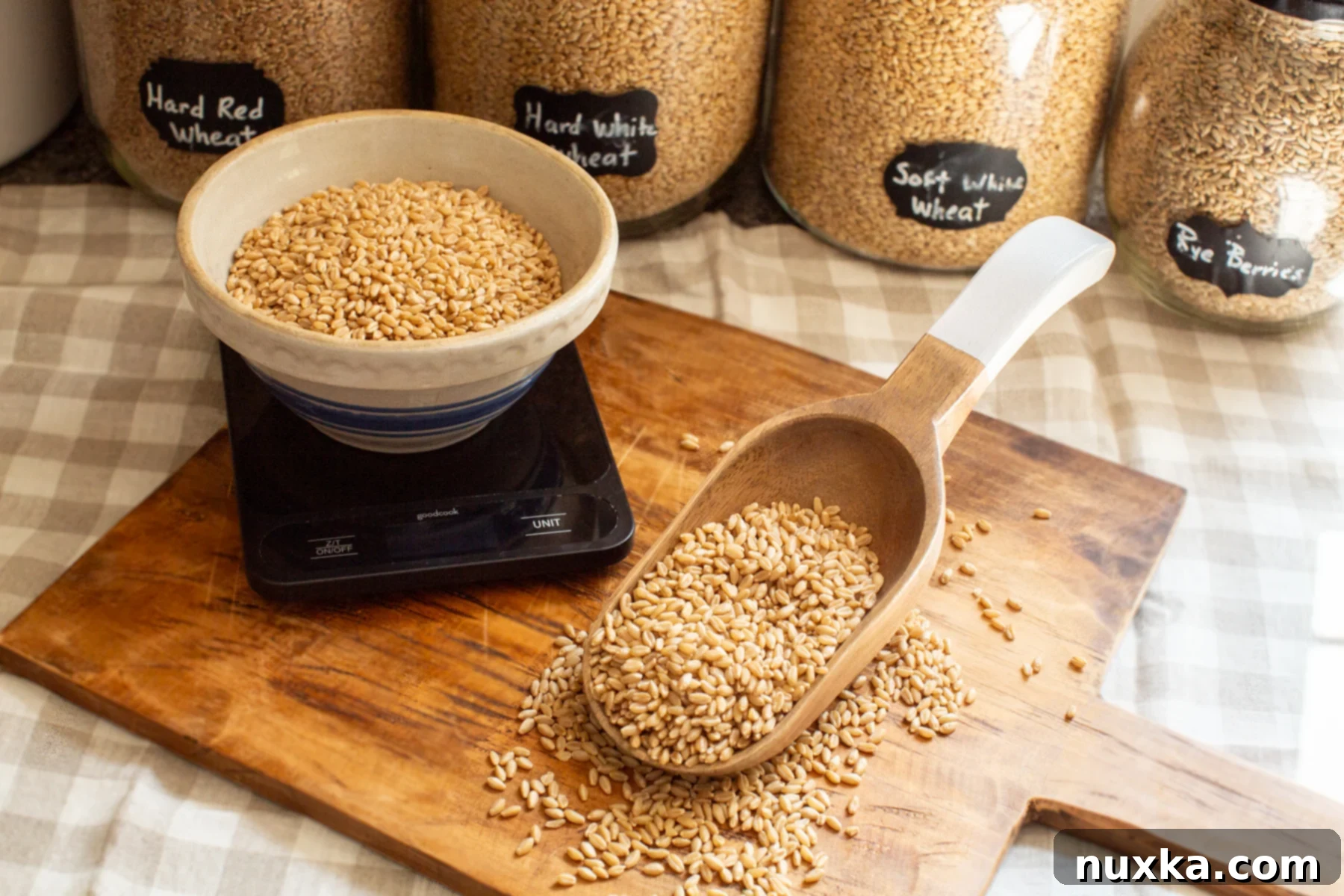
One day, spurred by a desire for accuracy, I decided to meticulously weigh white flour from each of my measuring cups. It’s a well-known culinary fact that weighing ingredients provides the most precise measurements every time. In culinary school, we were taught the metric system and emphasized that weighing dry ingredients, especially flour, consistently yields more accurate and repeatable results. With precise measurements, you can replicate any recipe countless times, achieving the exact same outcome whether you’re making a single portion or a hundred. Interestingly, grains and freshly milled flour always weigh consistently, simplifying the conversion process significantly.
So, I took each cup from my measuring set, filled it with white flour, and then weighed it on my kitchen scale, carefully noting down every gram. This systematic approach allowed me to create my own comprehensive conversion chart. This chart quickly became my invaluable “cheat sheet.” I even wrote all the gram conversions on a sticky note and taped it inside my cupboard for quick reference.
It was at this point that a monumental realization struck me: I could now confidently convert *any* of my beloved white flour recipes to freshly milled flour! This discovery was truly life-changing. No longer did I have to rely on guesswork or imprecise eyeballing of measurements. I could literally pick up any white flour recipe and confidently transform it into a wholesome, whole-grain version. While my friend opts for a simpler conversion of 140 grams per cup of flour, which works well for her, I personally find it incredibly helpful to have detailed gram measurements for even quarter-cup increments, ensuring maximum accuracy in all my baking endeavors.
Yeasted Breads vs. Sourdough Breads with Fresh Milled Flour
While I generally lean towards sourdough breads when baking with fresh milled flour, I still frequently utilize many yeasted bread recipes due to their inherent convenience and speed. Each method offers distinct advantages depending on my family’s needs and my schedule.
For instance, if I suddenly decide we need fresh English muffins for breakfast sandwiches, I’ll whip them up quickly with yeast. This is a far superior option to purchasing less nutritious, store-bought alternatives. Similarly, if hamburger buns are on the menu, I’ll opt for my versatile whole wheat bread dough made with commercial yeast. Any leftover dough from this batch can then be creatively transformed into something else, like a delicious cinnamon swirl raisin loaf, minimizing waste and maximizing deliciousness.
However, when I adhere to my weekly sourdough bread baking routine, I can plan our meals and baking projects well in advance. During these weeks, I typically select recipes such as dinner rolls for sliders, rustic artisan loaves, hearty sandwich breads, and chewy bagels. I always tailor my choices to complement the specific meals we have planned for that particular week, ensuring variety and freshness.
I’ve found sourdough breads to be remarkably more forgiving than their yeasted counterparts. With sourdough, you don’t have the same pressure to rush the dough into the oven immediately after preparation. Its fermentation process is slower and more adaptable. If my schedule changes unexpectedly, I have the flexibility to delay my sourdough bread baking until the following day without compromising the quality of the final product. This adaptability is a huge advantage for busy home bakers.
Establishing an Efficient Fresh Milled Flour Baking Routine
Creating a streamlined routine is essential for consistently baking with fresh milled flour. Here are some key strategies to ensure your success and enjoyment:
- Invest in a Heavy-Duty Electric Grain Mill: While hand-cranking mills have their place, they are not practical for long-term use if you intend to make all your family’s breads with freshly milled flour. An electric mill is crucial for consistency, speed, and producing a finer, more versatile flour.
- Designate a Dedicated Baking Corner: Set up a specific “grain station” in your kitchen for your mill and grain storage. This eliminates the friction of setting up and cleaning up each time, making you far more likely to mill fresh flour regularly and consistently. Accessibility is key to forming a habit.
- Calculate Your Family’s Bread Consumption: Understand how much bread your family consumes weekly. This knowledge allows you to plan effectively and commit to making those essential breads at home with your freshly milled flour, ensuring you always have a healthy supply.
- Implement a Dedicated Baking Day: Schedule a specific day each week to bake all your essential breads and other baked goods. For example, if you’re planning Mexican suppers, dedicate time to make a batch of fresh tortillas and freeze them until Taco Tuesday! Batch baking saves time and ensures you have nourishing options readily available.
- Start with Beginner-Friendly Recipes: Don’t overwhelm yourself. Begin your journey with simple, forgiving recipes. If you’re interested, I can share four of my favorite fresh-milled flour recipes for free; simply fill out the form on my about page.
- Convert Your Favorite Snacks and Baked Goods: Make a list of your family’s most loved homemade snacks or baked treats. Then, use a reliable conversion chart (like the one I developed) to adapt these recipes to utilize fresh milled flour, expanding your whole-grain repertoire effortlessly.
- Embrace Batch Baking and Freezing: Prepare larger quantities of baked goods and freeze them for later. I have a friend who makes cinnamon roll dough, freezes it unbaked, then thaws it, allows it to rise, and bakes it fresh whenever a craving strikes. This strategy ensures you always have delicious, homemade options without daily baking.
- Cultivate an Efficient Workflow: By creating a smooth and organized workflow for baking all your fresh milled flour goodies, you’ll not only stay organized but also consistently provide your family with wonderfully delicious and highly nutritious baked breads and treats.
In Summary: The Rewards of Baking with Freshly Milled Grains
Baking with freshly milled grains is an incredibly simple, yet profoundly rewarding, endeavor. By carefully selecting the right grain mill, choosing high-quality whole grains, and confidently converting your favorite recipes, you will undoubtedly feel inspired to create an abundance of nourishing and delicious breads for your family. This journey is about more than just baking; it’s about embracing a healthier lifestyle and connecting with your food on a deeper level.
While I don’t currently offer a formal course on freshly milled flour, I sincerely hope that the free information and insights shared here will serve as an invaluable resource for your home milling and baking adventures. My greatest desire is to ignite and inspire your baking journey by sharing the lessons and triumphs of my own experience.
If you found this guide helpful in any way, I would absolutely love to hear from you. Please feel free to leave a comment below, and together, let’s build a vibrant community around the incredible benefits and joy of baking with these healthy, wholesome grains!