Effortless Sourdough: My Simple Routine for Baking Delicious Bread Weekly
Embarking on the sourdough journey doesn’t have to be complicated. In fact, my approach to maintaining a sourdough starter and baking frequently demands minimal effort, allowing me to consistently provide fresh, homemade sourdough breads for my family every week! This simple routine is designed to be straightforward and approachable, even for absolute beginners eager to dive into the rewarding world of fermented bread.
I believe many people tend to overcomplicate sourdough baking. If it truly were a complex endeavor, I wouldn’t have been able to sustain it for so many years. While some bakers prefer a very thick starter consistency, I, and many others, find success with a more pancake-like batter. Regardless of your preference, I am excited to share my easy sourdough routine, offering you a clear glimpse into just how accessible and manageable this ancient craft can truly be. Forget the intimidating myths; let’s simplify sourdough together.
How My Ukrainian Ancestors Maintained Sourdough Starter Without Refrigeration
The history of sourdough bread is rich with ingenuity and simplicity, particularly when we look back at how our ancestors managed this living leaven. Sourdough in the old days was made with the most basic tools. My great-grandmother, for instance, wouldn’t have owned a precise digital scale or a fancy bread lame. Their methods were born out of necessity and a deep understanding of natural processes, a philosophy that deeply resonates with my laid-back sourdough approach today.
Imagine, without any of our modern conveniences, they knew how to preserve sourdough starter! This speaks volumes about the inherent simplicity of the process. My mother-in-law shared a fascinating technique from her past: when making her weekly bread, she would simply reserve a small portion of the dough clinging to the sides of her mixing bowl. She would then cover these dough scraps with flour, often freshly milled from the local mill, and store them that way. This method allowed the leaven to be preserved without refrigeration, ready for the next baking session. I find this traditional approach incredibly clever and inspiring!
Today, we have the added convenience of modern refrigeration. If my schedule doesn’t permit baking bread on the same day I feed my starter, I can easily pop it into the fridge. This significantly slows down the fermentation process, allowing me to continue baking with it the following day or even several days later without any loss in vitality. This flexibility is one of the greatest advantages of modern sourdough keeping.
Furthermore, the ability to store my starter in the fridge means I can maintain a larger quantity, enabling me to experiment with a diverse range of baked goods throughout the week. From rustic loaves to sweet rolls and savory flatbreads, having a ready supply of active starter opens up a world of culinary possibilities, all while keeping the process remarkably convenient.
Where I Sourced My Sourdough Starter
My sourdough journey began thanks to a generous relative who had been baking with sourdough long before I ventured into it. My aunt was a seasoned sourdough enthusiast, keeping her starter exceptionally active and bubbly through frequent use. Her thriving starter provided the perfect foundation for my own baking adventures.
If you’re looking to get started, the easiest way is often to ask around! If you know anyone who maintains a sourdough starter, don’t hesitate to ask for a small amount. Once you acquire a well-maintained starter, it typically becomes active and ready for baking within approximately four hours after a fresh feeding.
Much like my own experience, you’ll quickly discover how rapidly sourdough starter accumulates. It’s a living, growing culture that often produces more than you might immediately need for baking. This abundance led me, for a brief period, to sell sourdough starters to others. However, I soon realized that selling wasn’t my true passion.
Despite that, I’m still happy to share my starter if someone is truly in need. Yet, it’s important to emphasize that creating a sourdough starter from scratch is surprisingly simple and requires minimal equipment. You don’t even need a scale to get started! For those interested, I highly recommend watching how to easily make a sourdough starter using basic, everyday measurements. This experience of nurturing my own starter from scratch, and also seeing its rapid growth, taught me valuable lessons about using sourdough more efficiently and minimizing waste.
My Simple Sourdough Routine: Step-by-Step
Here’s an in-depth look at my basic sourdough process, from a sleepy starter in the fridge to a vibrant, active one ready for baking. This is typically how my starter looks after residing unfed in the fridge for a week or two.
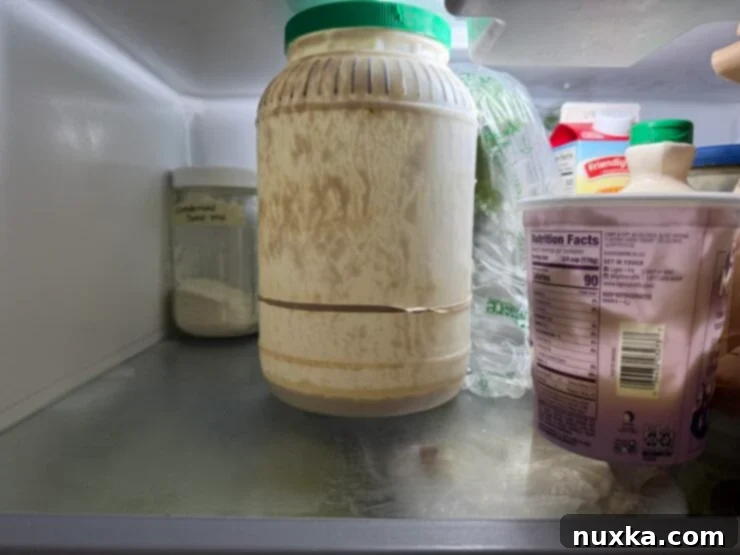
You might find this unconventional, but I keep my sourdough starter in an old gallon-sized salad dressing container, repurposed from a restaurant supply store. After my aunt recounted losing her starter due to a shattered glass jar, I wisely decided to store mine in something much more durable and less prone to breakage. This sturdy plastic container has proven to be an excellent, practical solution.
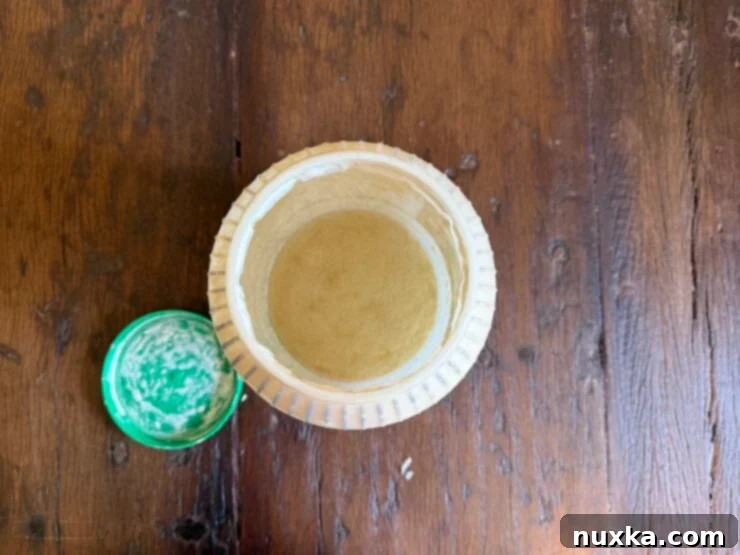
Within this container, I consistently aim to reserve about 1 to 2 cups of sourdough starter. This is the baseline amount I start with for each feeding cycle, ensuring I always have enough to propagate new starter and bake multiple loaves.
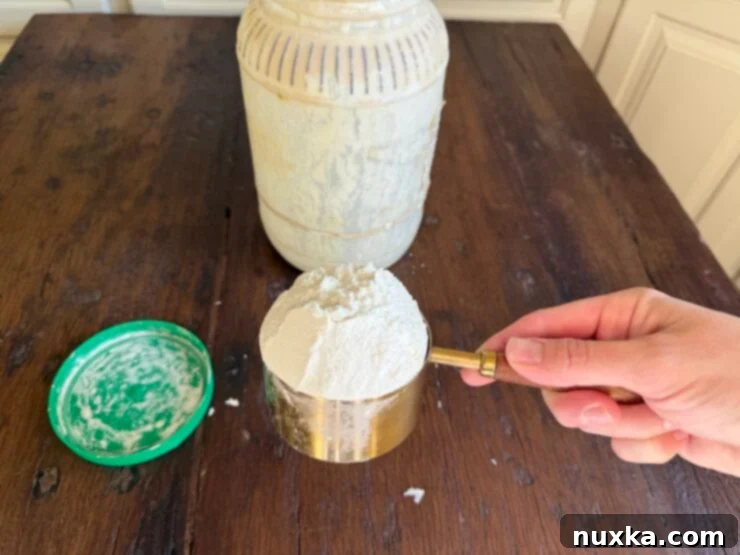
To feed my starter, I then add 2 heaping cups of unbleached flour. The quality of flour is crucial for a healthy starter, and unbleached varieties provide the necessary nutrients for robust activity. Following the flour, I incorporate 2 to 3 cups of warm tap water. We are fortunate to have well water, which I find works exceptionally well for my starter.
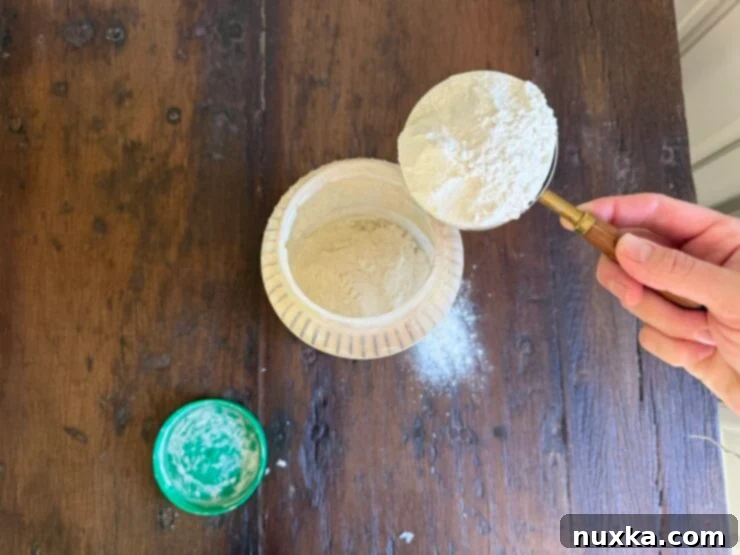
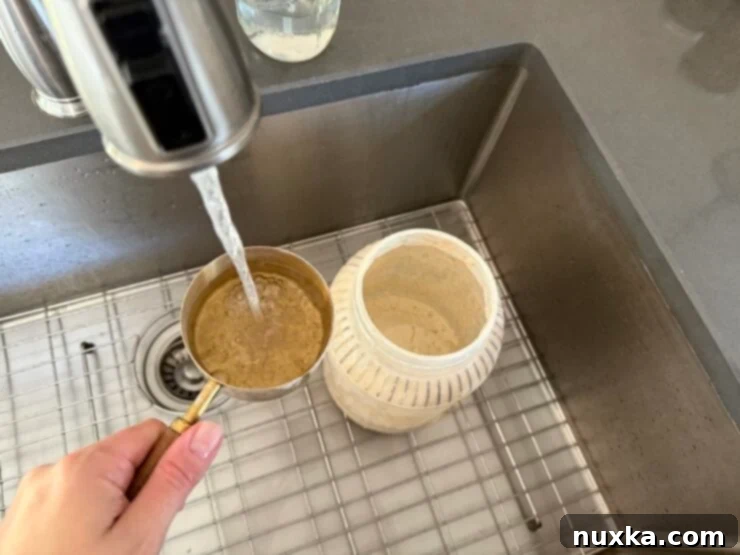
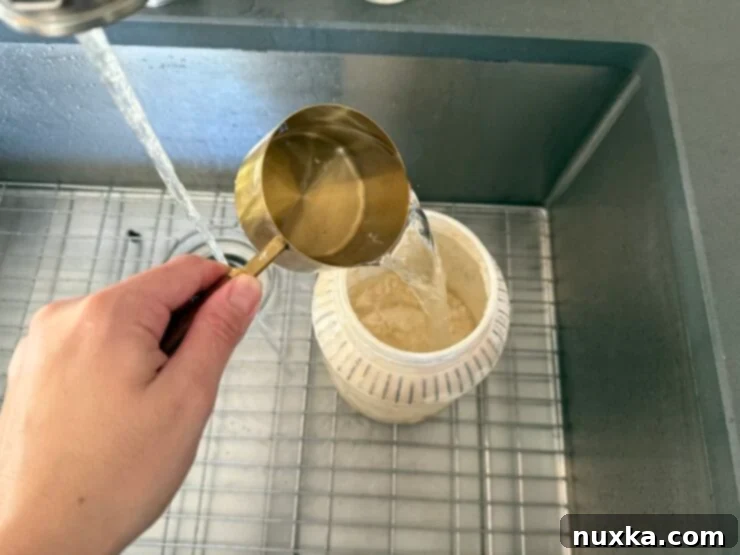
Using a long whisk, I thoroughly combine the starter with the freshly added flour and water. The goal is to eliminate any dry clumps and create a homogenous mixture, ensuring that all the new ingredients are fully incorporated and accessible to the microorganisms.
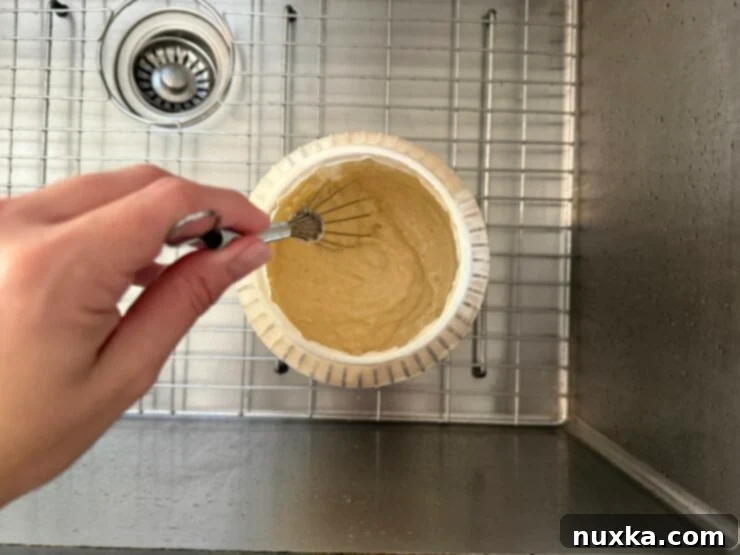
After mixing, the consistency of the fed starter should resemble a thick pancake batter. This particular consistency is what works best for my baking and allows for good aeration and fermentation. If it’s too thick, add a little more water; if too thin, a touch more flour.
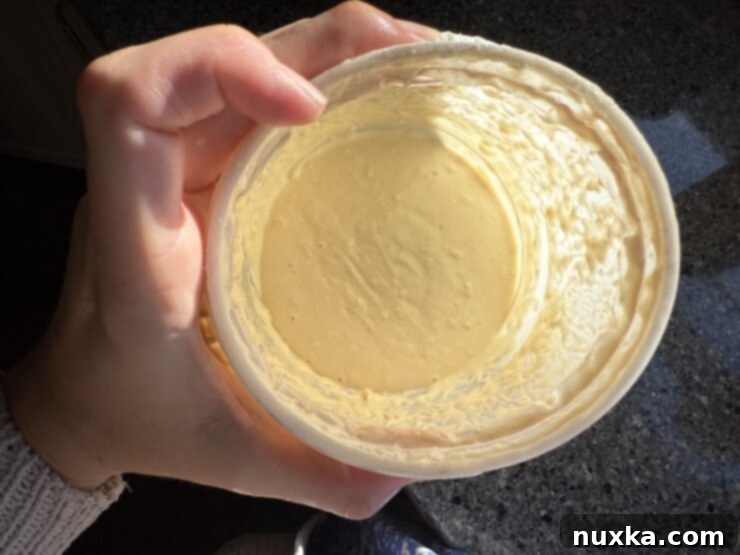
To easily track the starter’s progress and activity, I adjust a rubber band around the container to mark the initial level of the freshly fed starter. This visual cue makes it simple to observe how much it rises over time, indicating its readiness.
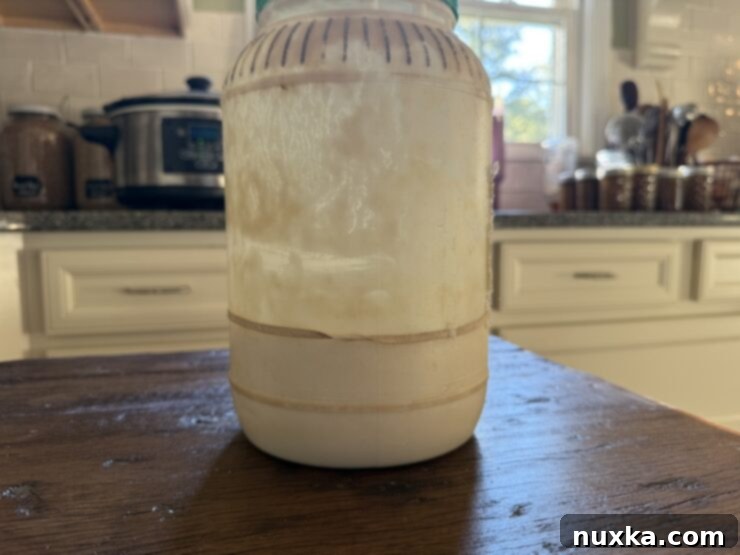
While I use a plastic container for practicality, you can absolutely use a large glass jar with a lid for your starter. They certainly offer an aesthetically pleasing view of the bubbling activity!
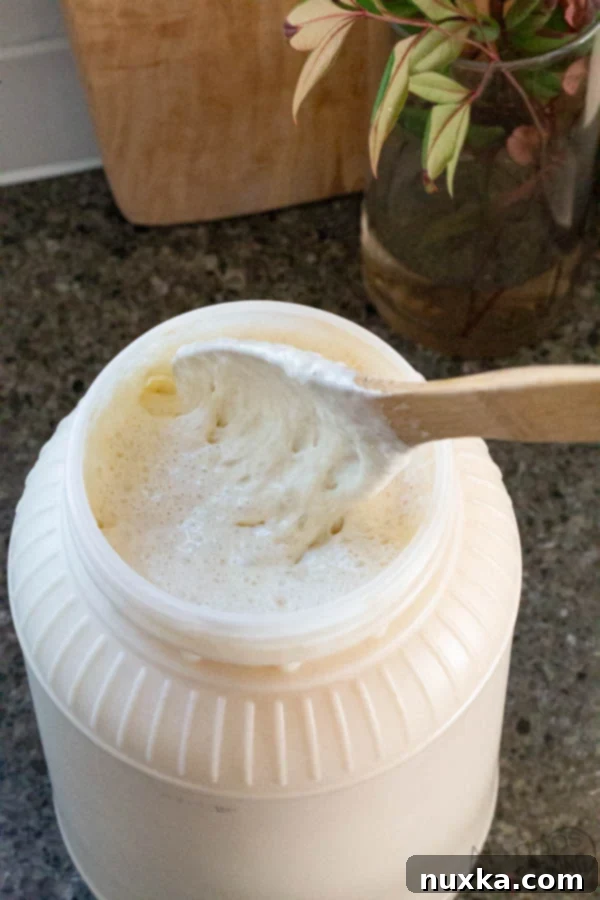
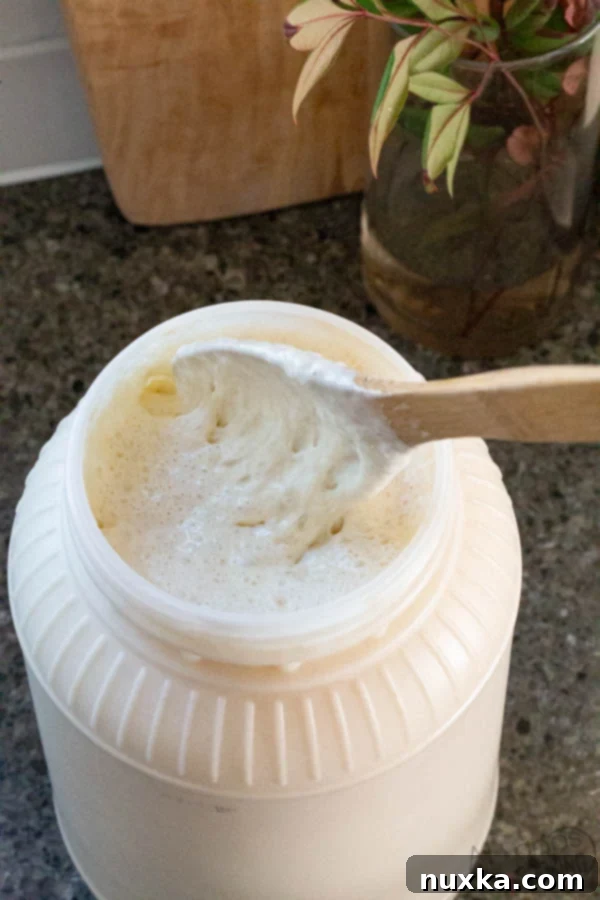
After approximately four hours at room temperature, my starter typically rises by about half its original volume and displays a very bubbly, active surface. This effervescent appearance is a clear indicator that it’s vigorous and ready for baking.
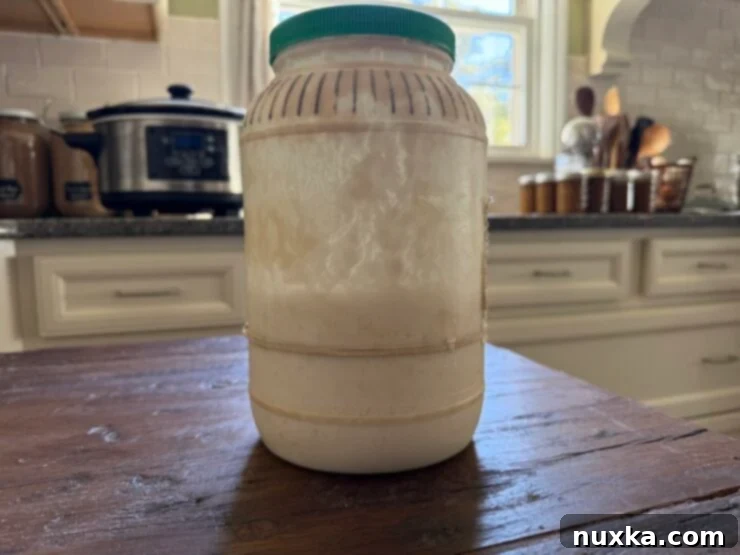
At this crucial point, I retrieve my kitchen scale and begin milling my grains, preparing for a session of weekly sourdough bread baking. With roughly 5 cups of active starter available, I can plan to create several different types of sourdough breads. If time is short, I often simply double my favorite recipes to make the most of my active starter. This volume ensures I have plenty for various bakes and enough to replenish my reserved starter.
Once I’ve finished preparing all my sourdough doughs for the week, I make sure to set aside the same amount of starter I began with—typically 1 to 2 cups. I allow this reserved starter to rest on the counter for a few hours, giving it a chance to become slightly “hungry” as its activity slowly subsides. After this brief period, it goes straight into the fridge, where it will patiently await my next baking day, usually about a week later. This simple cycle ensures a continuous supply of healthy, active starter with minimal fuss.
Baking Sourdough with Freshly Milled Flour: A Wholesome Experience
Every week, I essentially repeat this simple process. While I occasionally switch up the specific types of bread I bake, my go-to staples remain consistent. I regularly prepare Sourdough Sandwich Loaves, classic Artisan Bread, and delicious Bagels. A key element to all these recipes, and a cornerstone of my baking philosophy, is the use of freshly milled flour.
There are certainly days when I venture into other recipes, perhaps whipping up some jalapeño cheddar bagels, fluffy sourdough biscuits, or classic English muffins. However, the first three loaves are my reliable workhorses. Depending on how much starter I want to utilize, I often double or even triple some recipes. And if I find myself with about ½ cup of starter to spare beyond the 1-2 cups I aim to retain, it’s immediately transformed into pizza dough, which I then store in the fridge for those busy weeknights when a quick and delicious meal is essential.
The majority of my sourdough breads are made using freshly milled flour. If you’re new to this concept, I highly recommend exploring my comprehensive guide to baking with whole wheat flour. In that guide, I delve into the specifics of milling grains at home and discuss the various types of wheat berries best suited for different baking applications.
For me, incorporating freshly milled flour is a straightforward process. It simply involves using an electric grain mill to transform whole wheat berries into nutritious, vibrant flour. This task takes only a couple of minutes with a powerful electric mill, providing me with fresh flour that is not only incredibly wholesome but also packed with flavor and beneficial nutrients. This practice elevates the quality and health benefits of all my sourdough creations, making every loaf an even more rewarding experience.
How I Consistently Bake Sourdough Bread Weekly for My Family
Maintaining a consistent supply of delicious sourdough bread for my family is all about planning and efficiency. Typically, I designate at least one day a week specifically for sourdough baking. This dedicated baking day allows me to restock all our bread necessities, ensuring we always have fresh loaves on hand.
Once baked, I often freeze a portion of the sourdough breads to preserve their freshness and have them ready for later consumption. Alternatively, if I’m preparing items like sourdough pancakes, I’ll store the prepared batter directly in the fridge, ready to be cooked on a moment’s notice. This proactive approach drastically reduces effort during busy weekdays.
The inherent flexibility of sourdough also plays a significant role in my weekly routine. If, for any reason, I can’t complete all my baking on my chosen day—though I generally prefer to do so—I simply pop the formed doughs into the refrigerator. This allows me to pause the fermentation process and bake them fresh the very next day without compromising quality. This adaptability is truly a game-changer for busy home bakers.
Is Sourdough More Flexible Than Commercial Yeast? Absolutely!
One of the most compelling reasons to embrace sourdough baking is its remarkable flexibility compared to commercial yeast. Sourdough acts as an incredibly forgiving leavening agent. I have the freedom to leave my leavened dough out to rise at room temperature, encouraging a steady, natural fermentation, or I can tuck it away in the fridge to significantly slow down the process and allow for a longer, colder fermentation. If I decide later that I want things to progress again, I simply take the dough out, let it come back to room temperature, and it will slowly resume its rise.
In my opinion, this inherent flexibility makes sourdough far superior to commercial yeast, especially for those with unpredictable schedules. With sourdough, I can mix up a batch of dough and return to it hours later, or even the next day, after a stint in the refrigerator. This is a stark contrast to yeasted bread doughs, which often demand a much smaller window for baking once they’ve reached their optimal rise, making them less adaptable to interruptions or changes in plans.
It’s crucial for new sourdough bakers to understand that working with a sourdough starter inherently calls for a slow rise and offers immense flexibility. Unlike the speedy, often rushed process of yeast-leavened doughs, sourdough invites a more patient and adaptable approach, allowing you to fit baking seamlessly into your life rather than having your life dictated by the dough’s schedule.
The Benefits of Stretch and Folds vs. Traditional Kneading
For almost all my sourdough breads now, I predominantly employ the “stretch and fold” method instead of traditional kneading with a stand mixer. This technique has become a cornerstone of my simple sourdough routine, and for good reason.
The stretch and fold method is significantly easier and more appealing because it requires only one bowl and absolutely no heavy, noisy mixer. When working with freshly milled flour, traditional mixer kneading can be a lengthy process to develop gluten. Moreover, the robust nature of fresh whole wheat flour can sometimes strain and even burn out the motor of a mixer. I’ve discovered that sourdough, particularly when combined with freshly milled flour, forms an incredibly harmonious pairing with the stretch and fold technique.
This synergy occurs because the stretch and fold method allows the dough ingredients ample time to soak up the flour and for the gluten to develop more naturally and gently. In contrast, a mixer actively forces rapid gluten development to achieve elasticity. While kneading dough in a mixer will certainly work, it simply isn’t necessary, and arguably less efficient, when utilizing sourdough starter in conjunction with freshly milled flour. The slower, more gentle process of sourdough baking complements the slower hydration and gluten development of fresh flour perfectly.
Whenever I prepare dough these days, I typically start by mixing the ingredients by hand in a stoneware bowl. After a brief initial mix, I cover the dough with a damp tea towel or a shower cap and step away for about 30 minutes. During this resting period, known as autolyse, the gluten begins to develop naturally, simply from the interaction of the flour and water.
Consequently, the first set of stretch and folds might produce a somewhat shaggy dough. However, after two or three subsequent sets, spaced out with rest periods, the dough transforms into a smooth, elastic, and well-developed mass. I generally perform about four sets of stretch and folds, a method that proves effective for almost any dough, including my delightful sourdough dinner rolls made with fresh milled flour.
Baking bread this way is not only more streamlined but also requires no additional specialized tools. All you truly need are your hands and a few seconds to perform each set of stretch and folds. I’m usually in or around my kitchen anyway, making it easy to pop in and complete this quick task. Of course, if your schedule demands you be out of the kitchen for extended periods, a mixer might still be a more practical option for that specific timeframe, although I’d still recommend a bulk fermentation in the fridge to gain some flexibility. Personally, I find sourdough bread making to be a more hands-off and satisfying method without the use of a mixer. It simply requires a little more intentional planning and forethought about your baking schedule, just as you would with any sourdough process, to allow room for its natural rhythm.
Summary: Embrace the Simplicity of Sourdough
In conclusion, my simple sourdough routine stands as a testament to the fact that baking delicious, homemade bread doesn’t have to be complicated. Indeed, a straightforward and manageable routine is often the only way to consistently get wholesome bread on the table for a busy family. I am a firm advocate for easy, approachable breads that my loved ones will enjoy and that I can proudly share with others, spreading the joy of simple baking.
Baking with sourdough has seamlessly woven itself into the fabric of my lifestyle. I’ve meticulously developed a routine that perfectly aligns with my schedule and preferences. This routine is not only incredibly simple but also harmonizes beautifully with freshly milled flour, as the two truly work best in tandem, creating unparalleled flavor and nutrition in every loaf. It’s a method that celebrates the natural processes of fermentation and the wholesome goodness of freshly prepared ingredients.
If you have a sourdough routine that works exceptionally well for you, or if you have insights to share, I would genuinely love to hear your thoughts and comments! There’s always something new to learn from fellow bakers.
For more content that supports a simple and efficient kitchen, be sure to check out my weekly batch cooking articles. There, I detail how I prepare my favorite freezer meals, which are invaluable for navigating busy days or effortlessly hosting unexpected guests. These backup meals are a lifesaver, and I make an effort to stock them periodically for those unpredictable moments when a quick, nutritious option is needed.
If my routine has sparked any new ideas for your sourdough journey, or if you’d like to share what makes your baking successful, please leave a comment below. Let’s connect and talk all things sourdough! Happy Baking!