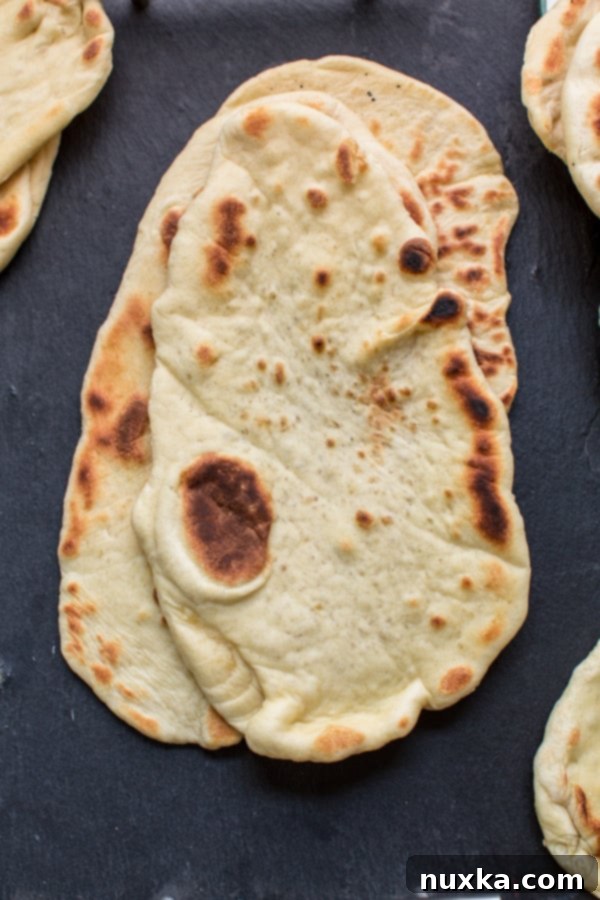
Authentic Homemade Naan Bread Recipe: Your Stonefire Copycat Guide to Fluffy Flatbread
Craving the warm, fluffy, and perfectly speckled flatbread from your favorite grocery store? This Naan Bread recipe is your ultimate guide to creating a delicious Stonefire Copycat at home! Naan, a beloved Indian flatbread, is incredibly versatile. It’s the ideal accompaniment for rich curries, a fantastic base for quick pizzas, a soft alternative to taco shells, a delightful dipper for savory sauces, and so much more. Get ready to elevate your home cooking with this simple yet satisfying recipe that promises an authentic taste and texture.
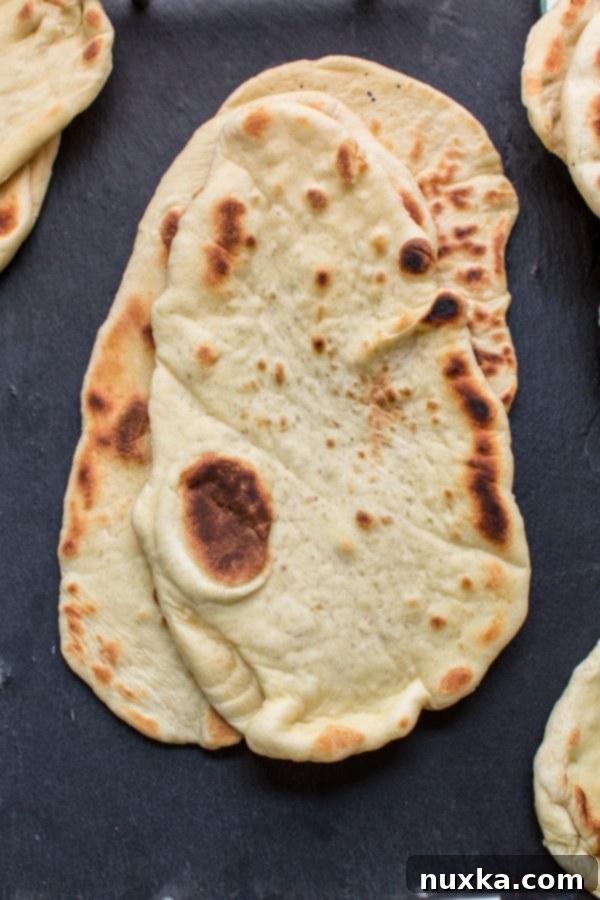
Why Choose Homemade Naan? Recreating Your Favorite Grocery Store Flatbread
While StoneFire Naan Flatbreads are undoubtedly a grocery store staple and the #1 Artisan Flatbread Brand for a good reason (and no, this isn’t sponsored!), making naan from scratch offers an unparalleled experience. Imagine biting into a freshly made, warm piece of naan, still slightly smoky from the skillet, and perfectly soft. The satisfaction of creating this versatile bread in your own kitchen is immense, and you’ll find that homemade naan often surpasses store-bought varieties in flavor and texture. Plus, you control the ingredients, ensuring a wholesome and delicious treat every time.
Stonefire’s widespread popularity isn’t just because of its convenience; its incredible versatility makes it a kitchen superhero. You can pair it with a hearty Chicken Curry, transform it into a quick and easy pizza base, or use it to scoop up a comforting bowl of beef chili. Naan truly is universally loved and incredibly adaptable to any meal.
The Origins and Culinary Versatility of Naan
Naan, meaning “bread” in Persian, boasts a rich history dating back centuries, primarily originating in regions encompassing modern-day India and Pakistan. Traditionally, this leavened flatbread is cooked in a tandoor, a cylindrical clay oven, which imparts its characteristic smoky flavor, distinct texture, and signature bubbly surface. While a tandoor might not be readily available in every home kitchen, this recipe masterfully replicates that authentic naan experience using a simple skillet, bringing the magic of traditional Indian cooking right to your stovetop.
Beyond its historical roots, naan’s true appeal lies in its incredible culinary versatility. It’s not merely a side dish; it’s a culinary canvas! Use it to mop up delicious sauces and gravies, create gourmet sandwiches and wraps, or even as a base for elegant appetizers. Think beyond curry: smear it with homemade hummus, top it with roasted vegetables and feta for a Mediterranean twist, or serve it alongside grilled meats and vibrant salads. From a simple snack to a sophisticated meal component, the possibilities with naan are truly endless, making it a fantastic addition to any kitchen repertoire.
Mastering the Art of Easy Homemade Naan Bread
Don’t let the idea of making bread from scratch intimidate you. This easy naan bread recipe is designed for simplicity and success, even for beginner bakers. The entire process, from mixing the ingredients to cooking the fluffy flatbreads, is streamlined into just a few straightforward steps. With only about 10 minutes of active prep time, a modest 35-minute rising period, and a mere 2 minutes per side for cooking, you’ll have warm, fresh naan in under two hours. For those new to using yeast, rest assured: as long as your water is comfortably warm to the touch (not too hot, not too cold – think baby bathwater temperature), your yeast will activate beautifully. The secret to achieving that signature pillowy soft texture with delightful air pockets? A perfect synergy between active dry yeast for the initial rise and baking powder for an extra lift during cooking, creating a truly irresistible flatbread that will have everyone asking for more.
Rate This Recipe
Pin Recipe
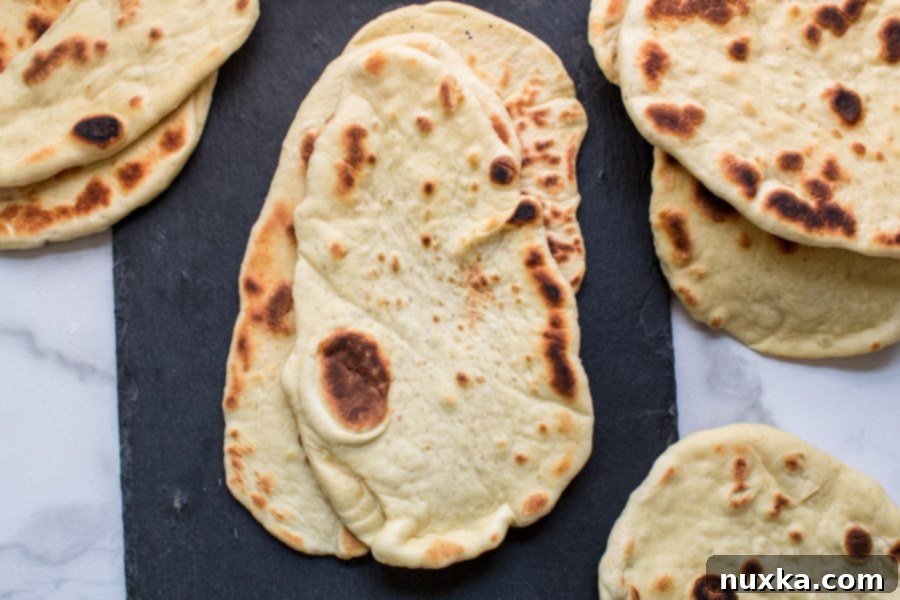
Naan Bread Recipe (Stonefire Copycat) – Fluffy & Easy!
Equipment You’ll Need
-
12″ Cast Iron Skillet
Ingredients for Fluffy Naan
Naan Bread:
-
1 1/4 cup warm water (approximately 105-115°F / 40-46°C, crucial for activating yeast)
-
1 Tbsp granulated sugar (feeds the yeast and aids in browning)
-
4 tsp active dry yeast (ensure it’s fresh for best results)
-
1 cup warm milk (contributes to tenderness and richness)
-
2 tsp salt (enhances flavor and controls yeast activity)
-
2 Tbsp vegetable oil (for dough elasticity and moisture)
-
3 Tbsp baking powder (for extra lift and soft texture)
-
1 large egg (adds richness and helps with structure)
-
5 2/3 cup all-purpose flour (divided for kneading, or as needed to achieve a tacky but manageable dough)
Step-by-Step Instructions for Homemade Naan
Preparing Your Naan Bread:
-
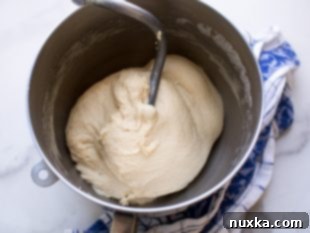
 In the bowl of a stand mixer fitted with a dough hook, combine the warm water, sugar, dry yeast, warm milk, salt, oil, baking powder, and egg. Whisk these wet ingredients together until well combined. Gradually add the flour, then knead on medium speed for 7 minutes until a smooth, elastic dough forms. The dough should be slightly tacky but pull away from the sides of the bowl. Cover the bowl with plastic wrap or a clean kitchen towel and let the dough rise in a warm place for 35 minutes, or until doubled in size.
 -
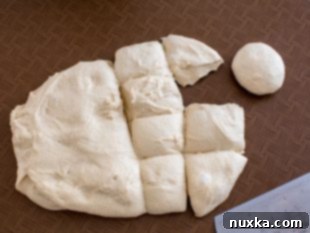
While the dough is rising, pre-heat your cast iron skillet over medium-low heat. Once the dough has risen, gently deflate it and turn it out onto a lightly floured surface. Divide the dough in half, then divide each half into 8 equal pieces, resulting in 16 total portions.
-
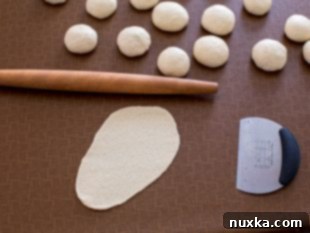
Take each dough piece and gently shape it into a smooth ball. On a lightly floured surface, use a rolling pin to roll each ball into an oval shape, approximately 10 inches long and 5-6 inches wide, aiming for a consistent thickness. Rolling out a few pieces at a time allows them to rest slightly, which can lead to more air bubbles forming during cooking.
-
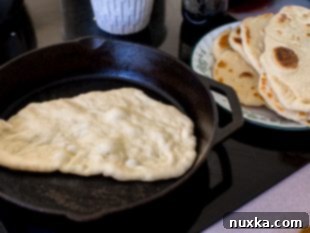
Place one rolled naan onto the pre-heated skillet. Cook for 2-3 minutes on the first side, or until you see large bubbles forming on the surface and the underside has golden-brown spots. Flip the naan and cook for another 2-3 minutes on the second side, until fully cooked through and similarly speckled. Repeat with the remaining dough, keeping cooked naan warm under a clean towel until ready to serve.
Chef’s Notes & Expert Tips for Perfect Naan
- Embrace the Bubbles: For extra airy naan with those desirable bubbles, try rolling out about 4 pieces of dough at a time and let them rest for a few minutes before cooking them on the skillet. This short resting period allows the gluten to relax and encourages more air pockets to form during cooking.
- Heat Control: Maintain a consistent medium-low heat on your skillet. Too high, and the naan will burn on the outside before cooking through; too low, and it won’t develop those lovely brown spots or puff up properly. Patience is key!
- Serve Immediately: Naan is best enjoyed fresh off the skillet when it’s still warm and soft. If you’re cooking multiple pieces, keep the finished ones warm in a basket lined with a clean kitchen towel or in a low oven (around 200°F / 95°C).
Nutrition Information (per serving)
Recommended Equipment for Your Homemade Naan Journey
Having the right tools can make your naan-making experience even more enjoyable and efficient. While this recipe is designed to be accessible, a few key pieces of equipment can significantly enhance your results and ease of preparation:
- 12″ Cast Iron Skillet: A heavy-duty cast iron skillet is ideal for cooking naan. It retains heat exceptionally well and distributes it evenly, ensuring that signature speckled, slightly charred finish that mimics a traditional tandoor oven. The consistent, high heat helps the naan to puff up beautifully, creating those desirable air pockets.
- Kitchen Aid 5 qt Heavy Duty Mixer: While you can certainly knead the dough by hand, a stand mixer with a dough hook attachment saves significant time and effort. It ensures the dough is perfectly kneaded to develop its gluten structure for that soft, chewy texture, making it especially helpful for larger batches or for those who prefer a hands-off approach.
- Black Stone Serving Tray: A stylish serving tray isn’t just for aesthetics; it’s perfect for presenting your warm, fresh naan to guests and helps keep the bread warm if you’re making multiple batches. This ensures every piece is enjoyed at its best.
Frequently Asked Questions About Naan Bread
What Exactly is Naan? Exploring this Indian Flatbread
Naan is a popular leavened flatbread widely enjoyed across the Middle East, Central Asia, and particularly prominent in Indian and Pakistani cuisine. The word “naan” itself is Persian for “bread,” signifying its ancient origins. Traditionally, naan is characterized by its tear-drop shape and distinct bubbly, slightly charred surface, which comes from being baked on the interior walls of a very hot clay oven called a tandoor. Unlike unleavened flatbreads (like chapati), naan incorporates yeast (or sometimes other leavening agents like baking powder and yogurt) to give it a soft, airy, and chewy texture that makes it incredibly satisfying and perfect for scooping up savory dishes. Its rich ingredients, often including milk, yogurt, or eggs, contribute to its signature tenderness.
Naan vs. Pita Bread: Understanding the Key Differences
While both naan and pita are popular flatbreads and share some similarities, they have notable differences in their ingredients and resulting texture. Both often use similar leavening agents like yeast. However, naan is traditionally enriched with dairy ingredients such as milk, yogurt, or sometimes eggs, which contribute to its significantly softer, richer texture, and slightly thicker profile. This enrichment results in a more tender, pillowy crumb. Pita bread, on the other hand, is generally a leaner dough, often made with just flour, water, yeast, and salt. This leaner dough, when baked at very high temperatures, causes the dough to puff up dramatically and create the characteristic “pocket” that is perfect for stuffing with fillings. While my fluffy pita bread for Gyros might defy the typical lean pita, the core distinction lies in the enriching ingredients that give naan its unique softness and delightful flavor, making it distinct from the pocket-forming pita.
Can You Use Whole Wheat Flour for Naan? Healthier Alternatives
Absolutely, you can use whole wheat flour to make homemade naan, offering a healthier, fiber-rich alternative to all-purpose flour. However, it’s important to note that whole wheat flour tends to produce a denser, heavier bread with a slightly nuttier flavor compared to naan made with solely all-purpose flour, due to its higher protein and fiber content. To achieve a lighter texture while still enjoying the nutritional benefits of whole wheat, consider substituting only a portion of the all-purpose flour (e.g., 1/2 to 1/3) with whole wheat flour. Another excellent technique is to create a “sponge batter” by mixing the yeast and a portion of the whole wheat flour with warm liquid at the beginning. This allows the whole wheat flour to hydrate fully and the gluten to start developing, resulting in a less dense and more tender loaf, as demonstrated in many Whole Wheat Naan Recipes. Experimenting with different ratios will help you find your preferred balance of texture and flavor.
What to Serve with Naan Bread? Endless Culinary Possibilities
Naan’s universal appeal makes it an incredibly versatile bread that pairs well with a vast array of dishes. It’s fantastic for scooping up sauces, ideal for wrapping, or simply enjoyed on its own. Here are some expanded ideas to get your culinary creativity flowing, showcasing just how much you can do with this delightful flatbread:
- Perfect White Rice: A classic and essential combination, especially when accompanying saucy curries, dals, or stews. Use the soft, absorbent naan to scoop up every last spoonful of flavorful rice and sauce.
- Hearty Beef Chili: Forget cornbread! A warm, fluffy piece of naan makes an unexpected yet incredibly delicious side for a rich, spicy bowl of beef chili, soaking up all the robust flavors and adding a satisfying chew.
- Quick Bread Pizza: Short on time or looking for a fun family meal? Naan makes an excellent individual pizza crust. Top it with your favorite marinara sauce, a generous sprinkle of cheese, and your preferred toppings (think pepperoni, veggies, or grilled chicken), then bake or pan-fry until the cheese is melted and bubbly.
- Creamy Broccoli Cheddar Soup: Elevate your soup experience by dipping torn pieces of fluffy naan into a comforting bowl of creamy soup. Its soft texture is perfect for soaking up rich broths and cheesy goodness.
- Homemade Hummus or Dips: Serve warm naan with a generous dollop of creamy homemade hummus, smoky baba ghanoush, a vibrant spinach-artichoke dip, or any other favorite spread for an easy and crowd-pleasing appetizer or snack.
- Kebabs and Grilled Meats: Naan is the perfect edible wrap for juicy kebabs, grilled chicken, lamb, or paneer. Load it up with fresh vegetables, a cooling raita (yogurt sauce), and a squeeze of lime for a complete meal.
- Breakfast Wraps or Sandwiches: Get creative and use naan as a soft, flavorful wrap for breakfast burritos, filled with scrambled eggs, cheese, and your choice of sausage or bacon. It also makes a fantastic base for warm deli-style sandwiches.
Pro Tips for the Best Homemade Naan
To ensure your homemade naan turns out perfectly every time, keep these expert tips in mind:
- Experiment with Whole-Wheat Flour: As mentioned, incorporating some whole-wheat flour can make your naan healthier and add a rustic flavor. Start by replacing 1/4 to 1/2 of the all-purpose flour with whole wheat flour to find your preferred texture balance. You’ll still achieve a fluffy result with added nutritional benefits.
- Infuse with Garlic or Herbs: For an aromatic twist, add crushed fresh garlic or finely chopped fresh herbs like cilantro or parsley directly to the wet ingredients before mixing in the flour. Alternatively, after cooking, brush the warm naan with melted butter infused with garlic for an irresistible finish.
- Smart Freezing for Future Feasts: Naan freezes beautifully, making it perfect for meal prep! Once cooked and cooled completely, stack pieces with parchment paper in between to prevent sticking, then seal them in an airtight freezer bag. Frozen naan can last for up to 3 months.
- Instant Pizzas or Sandwiches: Turn leftover naan into a lightning-fast meal. Spread marinara sauce, sprinkle cheese, and add your favorite toppings for a quick “naan pizza.” Alternatively, use it as a soft, flavorful base for a sandwich or wrap, perfect for lunchboxes or speedy dinners.
- Don’t Over-Roll: While you want a thin oval, avoid rolling the naan too thin. A slightly thicker dough (about 1/8 to 1/4 inch) will allow it to puff up more effectively and retain its characteristic chewiness. Too thin, and it might become crispy like a cracker.
- Consistent High Heat for Bubbles: Ensure your skillet is properly preheated before adding the naan. While the recipe calls for medium-low heat for even cooking, a good initial burst of heat when the naan hits the pan helps create those beautiful bubbles and ensures a quick, tender cook. If your pan isn’t hot enough, the naan might cook flat and tough.
- Brush with Butter (Optional but Recommended): For extra flavor and softness, brush the freshly cooked naan with a little melted butter or ghee. You can even infuse the butter with garlic or herbs for an aromatic touch.
Storing and Reheating Your Homemade Naan
One of the best things about homemade naan is that it’s wonderful to enjoy fresh, but it also stores remarkably well for later, allowing you to savor its goodness over several days or even months. Once your naan has cooled completely to room temperature, stack it with pieces of parchment paper in between each flatbread to prevent sticking. Store it in an airtight container or a heavy-duty freezer bag at room temperature for up to 2-3 days. For longer storage, homemade naan freezes exceptionally well for up to 3 months without significant loss of quality.
To Reheat Naan:
- Skillet: This method yields the best results, bringing back that fresh-cooked texture. Place naan directly into a dry, preheated skillet over medium heat for 30-60 seconds per side, until warmed through, soft, and pliable. You can add a tiny bit of butter or oil for extra richness.
- Oven: For reheating multiple pieces at once, wrap naan loosely in aluminum foil to retain moisture. Warm in a preheated oven at 350°F (175°C) for 5-7 minutes, or until soft and warm.
- Microwave: For a quick reheat, dampen a paper towel slightly, wrap it around a single piece of naan, and microwave for 15-20 seconds. Be careful not to over-microwave, or it can become chewy and tough.
Flavorful Naan Variations to Explore
While classic naan is delicious on its own, its simple yet rich base makes it a fantastic canvas for various flavor enhancements. Don’t hesitate to get creative with these ideas to customize your homemade naan:
- Garlic Herb Naan: This is a popular choice! Brush freshly cooked naan with melted butter infused with minced garlic and fresh chopped cilantro or parsley. A sprinkle of sea salt completes this savory favorite, perfect with almost any meal.
- Cheese Naan: For a delightful treat, sprinkle a thin layer of shredded mozzarella, cheddar, or a blend of your favorite cheeses onto one side of the rolled-out naan before cooking. You can either fold it in half like a quesadilla or leave it open-faced, then cook until the cheese is melted and bubbly.
- Sweet Naan: For a dessert-like indulgence, brush warm naan with melted butter, then sprinkle generously with a mixture of cinnamon and sugar. A drizzle of honey or a sprinkle of chopped nuts can also be added for extra sweetness and texture.
- Spicy Naan: If you enjoy a kick, incorporate a pinch of red chili flakes or finely chopped green chilies into the dough during mixing. Alternatively, sprinkle them on top of the rolled-out naan just before cooking for a spicier crust.
- Peshwari Naan: This is a traditional sweet naan variation, often filled with a mixture of finely chopped nuts (like almonds or pistachios), dried fruits (such as raisins or sultanas), and desiccated coconut, sometimes flavored with cardamom. You’d typically spread this mixture over half the rolled dough, fold the other half over, and seal the edges before cooking.
- Fenugreek (Methi) Naan: Add dried fenugreek leaves (kasoori methi) to the dough during mixing for an authentic Indian flavor profile. This adds a slightly bitter, aromatic note that pairs wonderfully with rich curries.
With this detailed Stonefire copycat naan bread recipe, you’re well-equipped to make incredibly fluffy, flavorful, and versatile naan right in your own kitchen. Enjoy the process of baking and savor every delicious bite of your homemade creation!